

DIFC: living in Dubai’s financial centre
Its own law, its own courts, top restaurants: what makes DIFC, which apartments are available and why the location is in demand with executives.
In short: DIFC is Dubai’s financial centre – with its own civil and commercial law based on English common law and its own courts. There are fewer apartments here than in Downtown, but a well-off population from banks, law firms and consultancies. For buyers, DIFC is a small, exclusive niche.
What DIFC is
DIFC stands for Dubai International Financial Centre. Founded in the mid-2000s, it is a financial free zone with a special feature: civil and commercial matters are governed by its own law modelled on English common law, and it has its own English-language courts – the DIFC Courts. The financial regulator in DIFC is the DFSA. Banks, asset managers, law firms and consultancies from around the world have their regional headquarters here.
DIFC also matters to property buyers for another reason: the DIFC Courts run a register where non-Muslims can record their will – even without residence in the UAE. More in our guide Making a will in Dubai.
Location and access
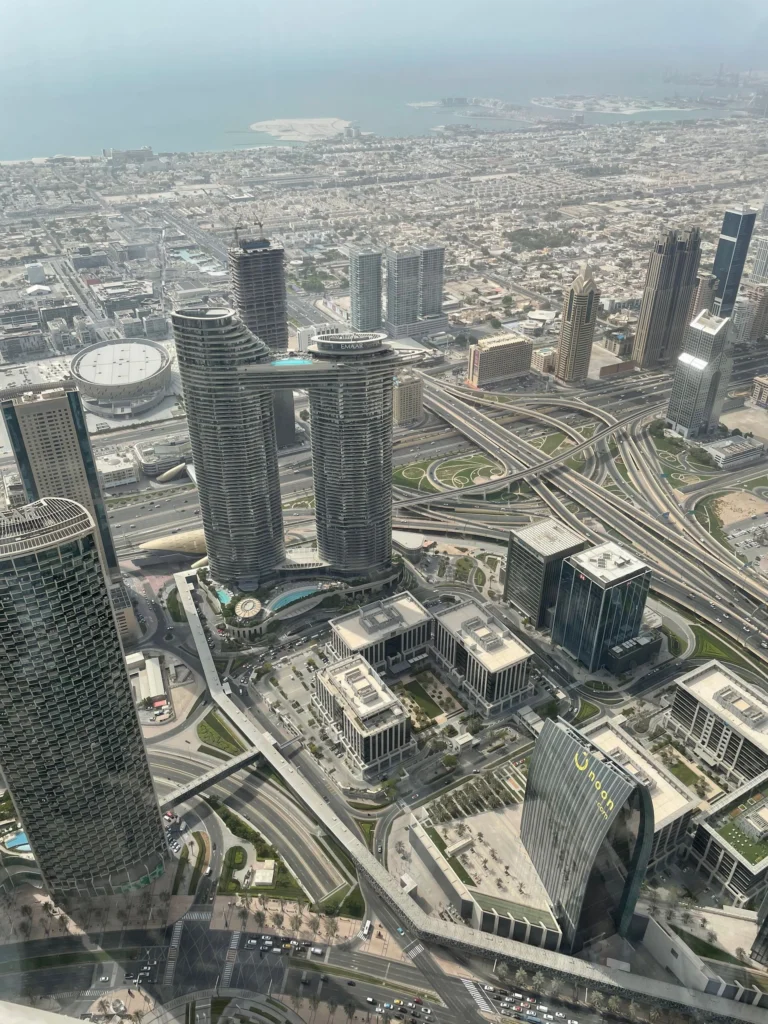
DIFC sits centrally on Sheikh Zayed Road, opposite Downtown Dubai. Next to it begin City Walk and the coastal district of Jumeirah; across the road lies Business Bay. The metro stops on Sheikh Zayed Road within walking distance, and DXB airport is about 15 minutes away.
Living in DIFC
The Gate and Gate Village
The landmark is The Gate, a gateway-shaped building that serves as the entrance to the financial centre. Behind it lies Gate Village with art galleries, cafés and some of the city’s best-known restaurants. In the evenings and at weekends DIFC becomes a meeting place for dining and going out.
Everyday life
- Work: If you work in DIFC, you literally live next to the office.
- Going out: High-end restaurants and bars.
- Shopping and leisure: Dubai Mall and City Walk are minutes away.
- Peace and quiet: Quieter than Downtown at weekends, with fewer tourists around.
Buying an apartment in DIFC
The residential offer in DIFC is limited to a manageable number of towers with apartments and penthouses, some of them architecturally remarkable. Because of the proximity to workplaces and the small number of units, supply is small and demand from executives is stable.
What matters
- Building: Quality, lobby and service differ markedly between the few towers.
- View: Apartments looking towards Downtown and the Burj Khalifa are particularly sought after.
- Service charges: Higher in the premium segment; check them in the Service Charge Index of the Dubai Land Department.
- Development: DIFC is being expanded; new projects in the area may increase supply.
How buying in DIFC works
In DIFC you mostly buy ready, second-hand homes. The process is clearly regulated and often takes only a few weeks once you agree:
- Check: viewing on site or by video, plus a look at service charges, condition and any existing tenancy.
- Sale agreement: buyer and seller sign the standard contract of the regulator RERA (Form F); a 10 percent deposit is usual.
- No objection certificate: the developer confirms with an NOC that no service charges are outstanding.
- Transfer: payment and transfer of ownership take place at a Registration Trustee of the Dubai Land Department; you receive the title deed.
You’ll find every step in detail in our guide Buying a ready property in Dubai. On top of the price come buying costs of around 6.5 percent – see buying costs. If you can’t be there, the trustee appointment can be handled with a power of attorney.
Running costs as an owner in DIFC
After buying an apartment, these are the main ongoing costs:
- Service charges: for maintenance, security, pools and common areas, calculated by the size of your unit. The approved rates for each building are listed in the Service Charge Index of the Dubai Land Department.
- Electricity and water: via the utility DEWA; many buildings add a separate charge for district cooling.
- Housing fee: 5 percent of the annual rental value, billed through the DEWA account. It is paid by whoever lives in the home – so by your tenant if you let it.
- Ejari: every tenancy contract is registered; via the Dubai REST app this costs AED 177.75.
- Management: if you aren’t on site, a property manager handles letting and upkeep for a fee.
Unlike in many countries, there is no annual property tax in Dubai. All items are explained in our guide Buying costs in Dubai.
A visa through your property
With a property in DIFC you may also be able to get a residence visa:
- Golden Visa: ten years of residence if your properties in Dubai are worth at least AED 2 million in total – also with a mortgage or, under certain conditions, off-plan.
- Investor visa: a shorter visa for owners who don’t reach the Golden Visa threshold.
The detailed requirements are explained in our guide Golden Visa with property.
Renting out
Typical tenants in DIFC are executives and specialists from the finance sector who want short commutes and a prestigious address – often on annual contracts supported by their employer. Holiday letting plays a smaller role than in Downtown or the Marina. Our rental yield calculator shows how a specific property works out.
DIFC, Downtown or Business Bay?
| Feature | DIFC | Downtown | Business Bay |
|---|---|---|---|
| Apartment supply | Small | Large | Very large |
| Typical tenants | Executives in finance and law | Couples, holidaymakers, professionals | Professionals |
| Holiday letting | Rather rare | Strong | Medium |
| Price level | High | High | Medium to high |
If you’re mainly targeting high-income long-term tenants, DIFC is the right place. If you want broader demand, you’ll find it in Downtown and Business Bay.
Pros and cons
In favour of DIFC
- Central, prestigious location
- Affluent long-term tenants
- Small supply, stable demand
- Top dining on the doorstep
Worth considering
- Few buildings, small choice
- High prices and service charges
- Less suited to holiday letting
- Hardly any greenery and no houses
Who DIFC suits
DIFC is above all a fit for the entrepreneur who wants to live centrally, close to law firms, banks and free zones, and for the lifestyle investor looking for a special address. If you want more choice, you’ll find it in neighbouring Downtown and in Business Bay.
Our verdict
DIFC is a small, exclusive residential market with a clear target group: people who work here and want a prestigious home. For investors counting on stable long-term letting to well-paid tenants, that’s attractive – provided the building and the price are right.
Living in DIFC?
We tell you which DIFC buildings are in demand and what rent is realistic.
Frequently asked questions
Does a different law apply to buying property in DIFC?
No. Purchase and registration go through the Dubai Land Department, as everywhere in Dubai. DIFC’s own law mainly concerns contracts, companies and wills.
Can I register my will in DIFC?
Yes. The DIFC Courts offer a wills register for non-Muslims, even without residence in the UAE. More in our guide Making a will in Dubai.
Are there new projects in DIFC?
Occasionally. The residential supply is small; new projects mainly come with the expansion of the financial centre.
Updated: October 2026. This article describes the district in general terms. Prices, rents and service charges change all the time; for a specific property we check the current figures with you.
Questions about your purchase?
Our team in Dubai answers them personally – in English, German, Swedish, Spanish or Norwegian, free of charge and without obligation.
