

Palm Jumeirah: buying a villa or apartment on the Palm
Trunk, fronds, crescent: how the Palm is laid out, which villas and apartments are available and what to know before buying on Dubai's best-known island.
In short: Palm Jumeirah is Dubai’s best-known man-made island and home turf of the luxury segment. The trunk holds apartment buildings, the fronds villas with their own beach, the crescent luxury hotels. Buying here means buying location and prestige – and you should know exactly which part of the Palm you’re buying on.
How the Palm is laid out
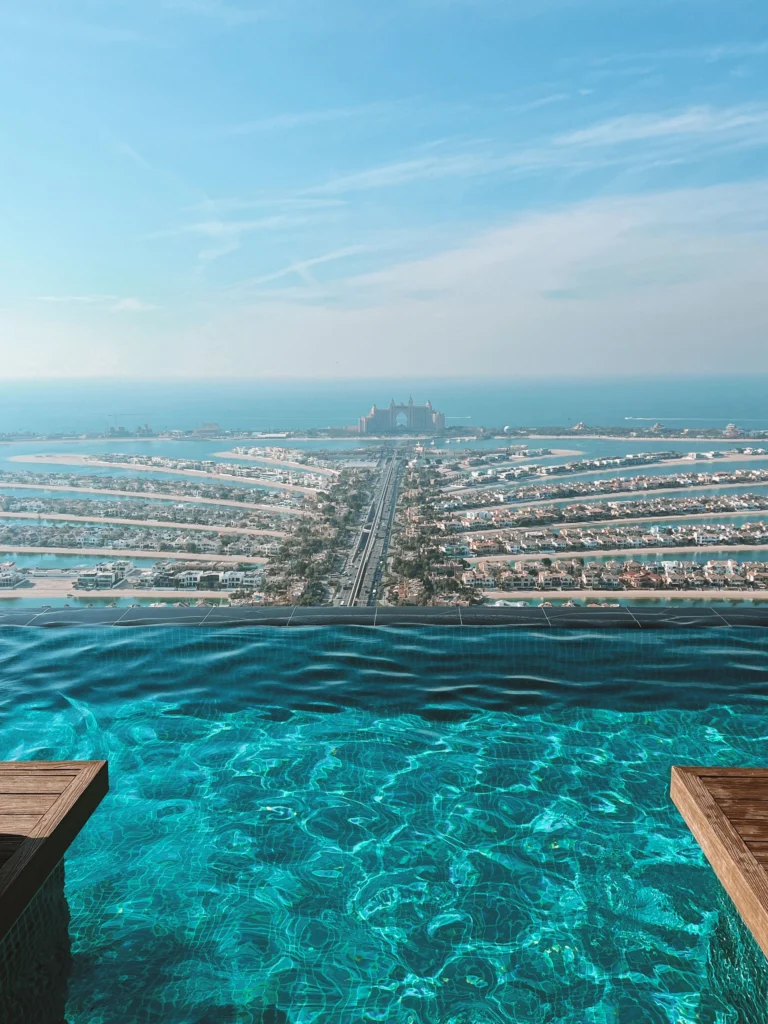
From above, the island looks like a date palm. For buyers it’s important to tell its three parts apart – they are almost like three separate districts:
- The trunk: The central spine with apartment buildings, hotels, Nakheel Mall and the Palm Tower with the observation deck The View at The Palm. Living here is urban, with views of the water or the Marina skyline.
- The fronds: 16 arms branching off the trunk. This is where the villas are, most with their own stretch of beach. Quiet, private and in high demand.
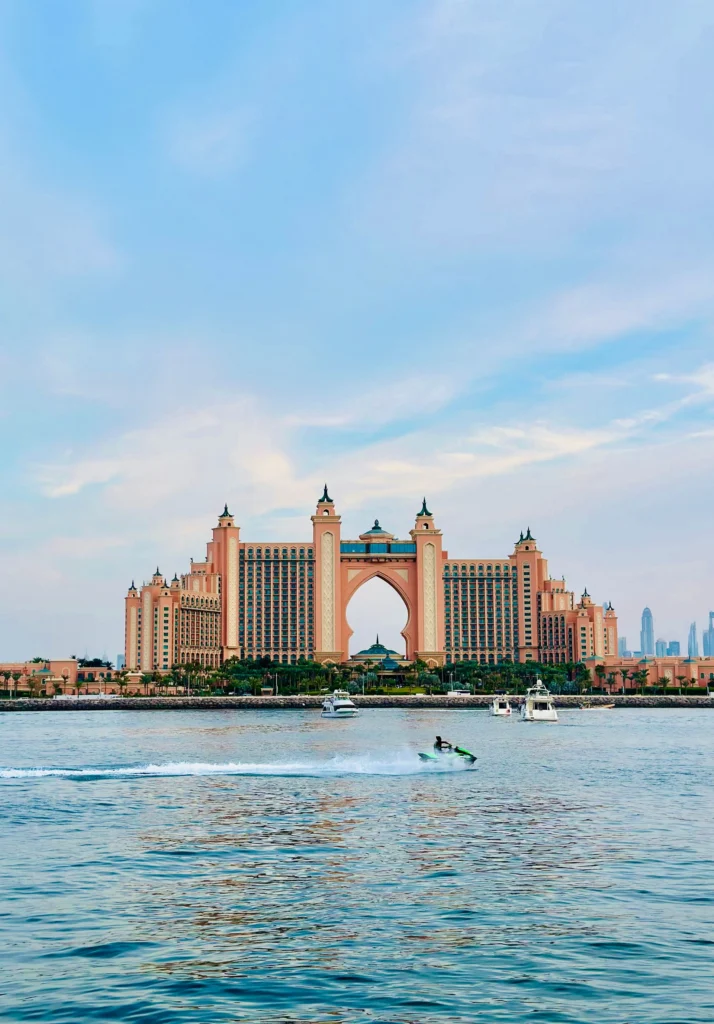
- The crescent: A long breakwater that encloses the fronds. Here you find luxury hotels such as Atlantis The Palm and Atlantis The Royal, plus resorts and branded residences.
The Palm is connected to Sheikh Zayed Road by a bridge and by an undersea tunnel between trunk and crescent. A monorail runs from the mainland to Atlantis and connects to the tram towards Dubai Marina.
How the island was built
Nakheel reclaimed the Palm from the sea in the early 2000s – from sand dredged from the seabed and rock for the breakwater. The idea behind it: Dubai had only a limited natural coastline, and the Palm extended it by many kilometres of beach. The first residents moved in from the late 2000s, and Atlantis opened in 2008.
Today the island is largely built up. New projects mainly appear where older buildings or plots are redeveloped, and as high-end branded residences. The second, larger palm – Palm Jebel Ali – is currently being built further south.
Living on the Palm
Beaches and beach clubs
The Palm has numerous beaches, many belonging to hotels or residential complexes. There are also beach clubs on the western side of the island and at the tip of the crescent. If you live on a frond, you usually have your own stretch of beach right behind the garden.
Leisure
- Aquaventure: The large Atlantis water park.
- The View at The Palm: Observation deck high above the trunk with views over the whole island.
- The Pointe: Restaurants and a promenade at the tip of the crescent facing Atlantis.
- Nakheel Mall: Everyday shopping in the middle of the trunk.
Everyday life
The Palm is well equipped for daily life: supermarkets, clinics and restaurants are on the trunk. Schools tend to be on the mainland, for example in Al Sufouh or towards Emirates Hills. At peak times the access road along the trunk can get congested – if you commute daily, factor that in.
Property on Palm Jumeirah
Villas on the fronds
The villas on the fronds are the heart of the Palm: detached houses with garden, pool and private beach. They are among the most coveted addresses in the city. Many have been extensively remodelled by their owners, so condition and finish vary greatly.
Apartments and penthouses
On the trunk and the crescent you’ll find apartments from studios to large penthouses. The older apartment complexes on the trunk are relatively accessible; newer projects and branded residences play in a completely different price league.
Branded residences
Apartments operated by well-known hotel brands are increasingly in demand – with concierge, hotel service and often a rental programme. For buyers who don’t live in Dubai this can be convenient. But check the service charges and the terms of the rental programme carefully.
A large share of properties are above AED 2 million and therefore qualify for the Golden Visa. New projects follow the rules for off-plan purchases; everything else follows the process for buying a ready property.
Running costs as an owner in on the Palm
With a house, some typical costs come on top of the usual items:
- Service charges: for roads, green spaces, security and community facilities. The approved rates are listed in the Service Charge Index of the Dubai Land Department.
- Electricity and water: via DEWA; noticeably higher for large houses with pool and garden than for apartments, especially in summer.
- Garden, pool and air conditioning: regular care and servicing are a must if the house is to keep its value.
- Housing fee: 5 percent of the annual rental value via the DEWA bill – paid by the tenant if you let.
- Ejari: registration of every tenancy contract, AED 177.75 via Dubai REST.
There is no annual property tax. All buying costs are explained in our guide Buying costs in Dubai.
A visa through your property
With a property in on Palm Jumeirah you may also be able to get a residence visa:
- Golden Visa: ten years of residence if your properties in Dubai are worth at least AED 2 million in total – also with a mortgage or, under certain conditions, off-plan.
- Investor visa: a shorter visa for owners who don’t reach the Golden Visa threshold.
The detailed requirements are explained in our guide Golden Visa with property.
Renting out or living in it
Many buyers on the Palm use their property themselves – as a second home or main residence. If you rent out, there are two routes:
- Holiday letting: The Palm is very popular with holidaymakers, especially apartments with a sea or Atlantis view and villas with a beach. You need a holiday home permit and a professional operator.
- Long-term letting: In demand with executives and families who want to live on the island on an annual contract.
With luxury properties the running yield is often lower than with smaller apartments elsewhere – here the stability of the location counts instead. Check what that looks like in figures with our rental yield calculator.
Pros and cons
In favour of the Palm
- A world-famous address
- Villas with private beach
- Limited supply – the island is complete
- High demand from holidaymakers and executives
- Luxury hotels, beach clubs and restaurants on site
Worth considering
- High entry prices and service charges
- Traffic on the trunk at peak times
- Big quality differences between older and new buildings
- Running yield often lower than with smaller apartments
Who the Palm suits
The Palm is the top address for the lifestyle investor who wants exclusivity and uses the property personally or lets it at a high level. For the Plan B investor an apartment on the trunk can be interesting. If you want something similar on the coast with newer buildings, compare Emaar Beachfront or the exclusive Jumeirah Bay Island.
How buying in Palm Jumeirah works
In Palm Jumeirah there are ready properties as well as projects under construction. The process differs:
- Ready property: sale agreement in line with RERA (Form F) with a deposit of usually 10 percent, a no objection certificate (NOC) from the developer, then payment and transfer at a Registration Trustee of the Dubai Land Department. Details in our guide Buying a ready property.
- Off-plan: reservation, purchase agreement with the developer (Sale and Purchase Agreement), registration in the interim register Oqood and payments according to construction progress into an escrow account. On handover you receive the title deed. Details in our guide Buying off-plan in Dubai.
For ready properties, budget around 6.5 percent in buying costs; for off-plan mainly the 4 percent registration fee. Both can be done from abroad – with video viewings and a power of attorney.
Our verdict
Palm Jumeirah is less a yield investment than a bet on a globally unique address with limited supply. If you buy here, know exactly which part of the island and which building – then the Palm is one of the most stable addresses in the city.
A villa or penthouse on the Palm?
We check the position on the island, the building, service charges and rental options – discreetly and personally.
Frequently asked questions
Can foreigners buy on Palm Jumeirah?
Yes. Palm Jumeirah is a freehold area. You acquire full ownership, recorded in the land register of the Dubai Land Department.
What is the difference between trunk, fronds and crescent?
The trunk has apartment buildings and Nakheel Mall, the fronds villas with private beaches, and the crescent luxury hotels and resorts such as Atlantis.
Are there still new projects on the Palm?
Yes, but few – mostly high-end branded residences or redevelopments of individual plots. Larger new island projects are being built on Palm Jebel Ali and the Dubai Islands.
Nearby districts
Updated: October 2026. This article describes the district in general terms. Prices, rents and service charges change all the time; for a specific property we check the current figures with you.
Questions about your purchase?
Our team in Dubai answers them personally – in English, German, Swedish, Spanish or Norwegian, free of charge and without obligation.
