

The World Islands: islands in the shape of a world map
Around 300 man-made islands forming a world map – only a few built on, reachable only by boat: what buyers should know about The World Islands.
In short: The World Islands are around 300 man-made islands a few kilometres off the coast that together form the shape of a world map. Only a few have been built on so far; the best-known project is “Heart of Europe”. The islands can only be reached by boat. For buyers this is a niche market with particular opportunities and risks.
- Location and access
- The history of the project
- Life on the islands
- Property on The World Islands
- How buying in The World Islands works
- Running costs as an owner in The World Islands
- A visa through your property
- Typical mistakes when buying on The World Islands
- Renting out
- Pros and cons
- Who The World Islands suit
- Our verdict
- Frequently asked questions
Location and access
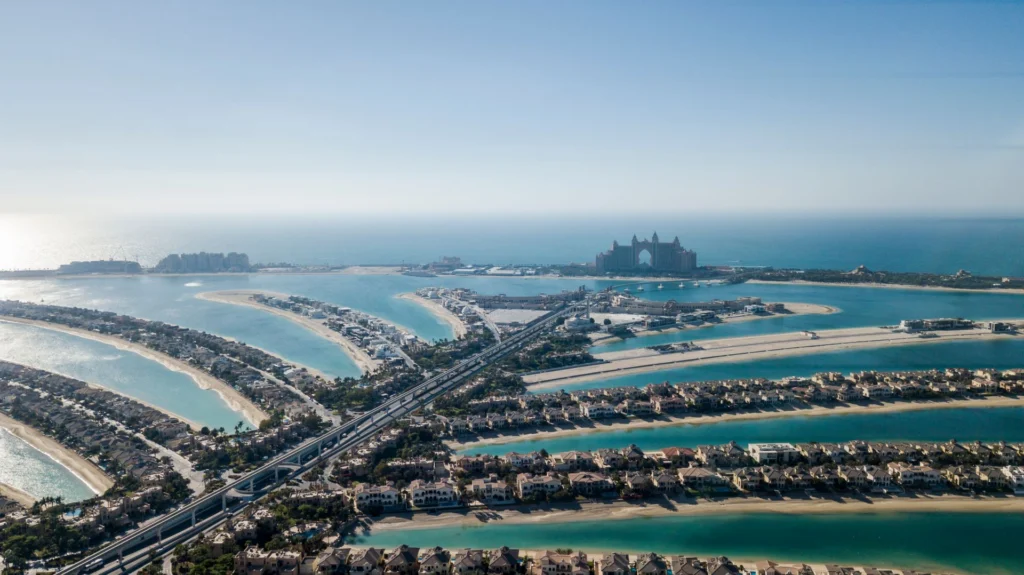
The islands lie in the sea off the coastal district of Jumeirah, between Palm Jumeirah and the Dubai Islands. There is no bridge: residents and guests arrive by boat or seaplane. The crossing from the mainland takes about 15 to 30 minutes depending on the starting point.
The history of the project
Nakheel reclaimed the islands in the 2000s; from the air they look like a world map with continents and countries. Many islands were quickly sold to investors. The 2008 financial crisis, however, slowed development sharply, and most islands remained undeveloped. Since then only individual projects have been built, including a resort and, best known, The Heart of Europe by a private developer, with hotels, villas and residences in the style of European cities.
Life on the islands
- Seclusion: Peace, quiet and the sea, far from the city bustle.
- Logistics: Shopping, work and school mean a boat trip every time.
- Infrastructure: On the developed islands, mainly hotel and resort facilities.
- Use: More often a holiday or second home than a permanent residence.
Property on The World Islands
Buyers purchase villas and residences in the emerging projects, or whole islands that still have to be developed. Most projects are off-plan.
What matters
- Project status: What has already been built and what is only planned? The differences are large.
- Developer: Financial strength and experience are crucial, because building on an island is complex.
- Access and costs: Boat connections, utilities and service charges must work in the long term.
- Resale: The pool of buyers is small, so a sale can take longer.
How buying in The World Islands works
In The World Islands you mostly buy from the developer, i.e. off-plan. This is how it works:
- Reservation: a reservation fee secures the unit.
- Purchase agreement: you sign the Sale and Purchase Agreement with the developer. Ask to see all fees, the payment plan and the planned handover date.
- Oqood: the purchase is entered in the interim register of the Dubai Land Department; the 4 percent registration fee is due at this point.
- Payment plan: you pay in instalments according to construction progress into a protected escrow account.
- Handover: after completion you inspect the unit, pay the final instalment and receive the title deed.
How your money is protected and what to look for in a developer is explained in our guide Buying off-plan in Dubai.
Running costs as an owner in The World Islands
With a house, some typical costs come on top of the usual items:
- Service charges: for roads, green spaces, security and community facilities. The approved rates are listed in the Service Charge Index of the Dubai Land Department.
- Electricity and water: via DEWA; noticeably higher for large houses with pool and garden than for apartments, especially in summer.
- Garden, pool and air conditioning: regular care and servicing are a must if the house is to keep its value.
- Housing fee: 5 percent of the annual rental value via the DEWA bill – paid by the tenant if you let.
- Ejari: registration of every tenancy contract, AED 177.75 via Dubai REST.
There is no annual property tax. All buying costs are explained in our guide Buying costs in Dubai.
A visa through your property
With a property in The World Islands you may also be able to get a residence visa:
- Golden Visa: ten years of residence if your properties in Dubai are worth at least AED 2 million in total – also with a mortgage or, under certain conditions, off-plan.
- Investor visa: a shorter visa for owners who don’t reach the Golden Visa threshold.
The detailed requirements are explained in our guide Golden Visa with property.
Typical mistakes when buying on The World Islands
- Confusing renderings with reality: Beautiful visualisations say nothing about construction progress. Ask to see the current status on site or by video.
- Underestimating logistics: Boat connections, power, water and waste disposal cost much more on an island than on land.
- Counting on a quick resale: The pool of buyers is small. Plan for a long holding period.
Renting out
Letting here mainly happens through hotel and resort programmes aimed at holidaymakers. Classic long-term letting plays hardly any role because of the access situation.
Pros and cons
In favour
- A unique location in the sea
- Exclusivity and quiet
- A special property with rarity value
Worth considering
- Only reachable by boat
- Long history of delays
- Small buyer pool, difficult resale
- Complex utilities and maintenance
Who The World Islands suit
The World Islands suit the individualist looking for the extraordinary, and the lifestyle investor with a soft spot for island life. If you want sea and exclusivity with better access, look at Palm Jumeirah or Jumeirah Bay Island.
Our verdict
The World Islands are fascinating, but not a market for beginners. If you buy here, you need patience, capital and a very thorough check of the project. For most buyers, other coastal districts are the safer choice.
Interested in The World Islands?
We check the project status and developer and tell you honestly whether the risk is worth it.
Frequently asked questions
How do you get to The World Islands?
Only by boat or seaplane. There is no bridge to the mainland.
How many islands have been built on?
Only a small share of the roughly 300 islands has been developed so far; most are still empty.
Nearby districts
Updated: October 2026. This article describes the district in general terms. Prices, rents and service charges change all the time; for a specific property we check the current figures with you.
Questions about your purchase?
Our team in Dubai answers them personally – in English, German, Swedish, Spanish or Norwegian, free of charge and without obligation.
